How Plumbers Book Jobs After Hours Without Hiring Dispatch Staff
A plumbing call after hours can mean anything from a request for a routine fixture repair to a leak that cannot wait until morning. If the only option is voicemail, the customer may keep calling until someone answers. If every call rings through to an on-call plumber, the team loses rest and work gets interrupted. A better approach starts with a simple, consistent process that answers basic questions, collects the right information, and routes only the calls that need immediate attention.
When customers cannot reach you, they may not leave enough information for a useful callback. Get a free consultation about building an after-hours call and booking process for your plumbing business.
Separate urgent calls from booking requests
Start by defining what “urgent” means for your company. Your definition should reflect the work you take, the areas you serve, who is on call, and what response you can actually provide. Avoid asking an automated system or answering staff to diagnose a plumbing problem. The goal is to identify the caller's concern, collect useful facts, and direct them to the right next step.
For example, the intake can ask whether water is actively leaking, whether the caller has taken a safe step to limit damage, and whether the property is within your service area. It can then use your written rules to offer an on-call transfer for qualifying situations. A routine request can be recorded for the next business day or guided toward an appointment request. Tell callers clearly what happens next and do not promise a response time the team cannot meet.
Capture details that help dispatch
A useful after-hours request is more than a phone number. Ask for the caller's name, callback number, service address, a short description of the problem, and a preferred time to be contacted. You may also need to know whether the caller is a homeowner, tenant, or property manager, but only collect details that help your team take action.
Offer booking without overcommitting
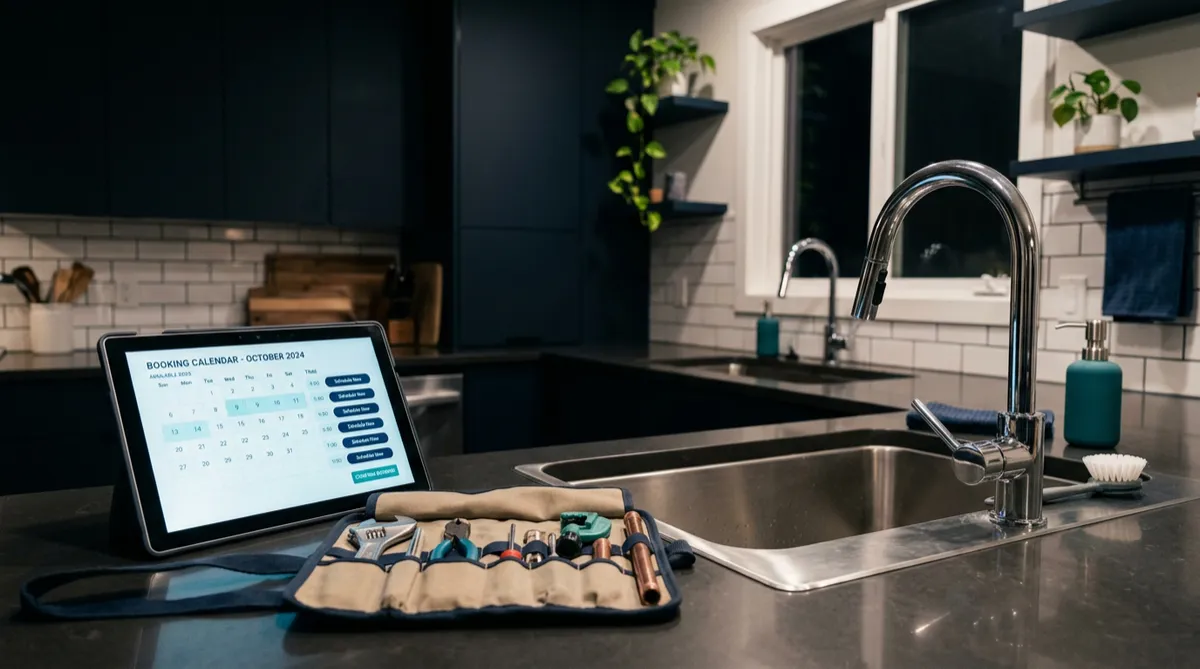
Scheduling can be useful after hours when it reflects your real capacity. Decide whether callers can select a confirmed appointment, request a preferred window, or ask for a callback to schedule. Each option is valid if the wording matches what your team will do. A “request” should not sound like a confirmed visit, and a confirmed visit should appear on the schedule your dispatch team checks.
Build a call path that works while you are working
A straightforward process often includes three paths: urgent calls for an on-call person, routine requests captured for follow-up, and existing customers who need an update or a reschedule. The first question should identify which path applies. A clear greeting, a few focused questions, and a specific handoff are generally more useful than a long menu.
- State that the business is outside regular office hours.
- Ask what kind of plumbing help the caller needs and where the job is located.
- Use your criteria to route urgent calls; do not make the caller guess.
- Capture contact details and summarize routine requests for staff.
- Tell the caller whether they are booked, awaiting confirmation, or should expect a callback.
An AI receptionist for plumbing calls can handle configured intake questions when your staff cannot pick up. Plumbing lead capture can organize the details for the next workday, while appointment scheduling for service calls can help customers choose from approved availability.
Make the morning handoff reliable
After-hours capture creates value only if the day team sees and acts on the requests. Send new inquiries to a place your dispatcher reviews, such as an assigned inbox or task list. Identify urgent requests separately from routine booking needs. Decide who is responsible for callbacks and what to do if a customer cannot be reached.
For more guidance, read how to respond quickly to plumbing emergency calls and how after-hours HVAC lead capture can be organized.
Keep the caller experience human and clear
Test calls from a new customer's perspective. Try a routine booking, a caller outside your service area, an unclear address, a caller who wants a person, and an urgent request. Listen for confusing prompts and confirm that staff receive the information in a usable format. Update instructions when your hours, service areas, or on-call arrangements change.
Want to turn after-hours calls into organized requests and appropriate bookings? Explore an after-hours setup for your plumbing team.
Frequently asked questions
Does after-hours booking require a full-time dispatcher?
Not necessarily. A defined intake and routing process can capture routine requests and make approved booking options available. People still need to handle exceptions, urgent situations, and follow-up according to your policy.
Should every plumbing caller be allowed to book online or by phone?
No. Use booking rules that reflect your capacity, service area, job type, and emergency coverage. Some requests should be collected for a dispatcher to review before a time is confirmed.
What is the most important after-hours information to capture?
Start with a reliable callback number, service address, short description, and an accurate indication of urgency. Add other questions only when they help your team decide what to do next.
Start with a small, dependable process
You do not need to make every after-hours call complicated. Define which calls need a person now, which can wait for the day team, and what information staff need to follow up. Connect the intake to a schedule your team trusts, then review the requests and adjust the flow. The result should be simple for the caller and genuinely useful to the person who dispatches the work.
Build an after-hours process that fits your plumbing business
Request a call to plan AI receptionist coverage, lead capture, and appointment scheduling around your service area, on-call rules, and real availability.
