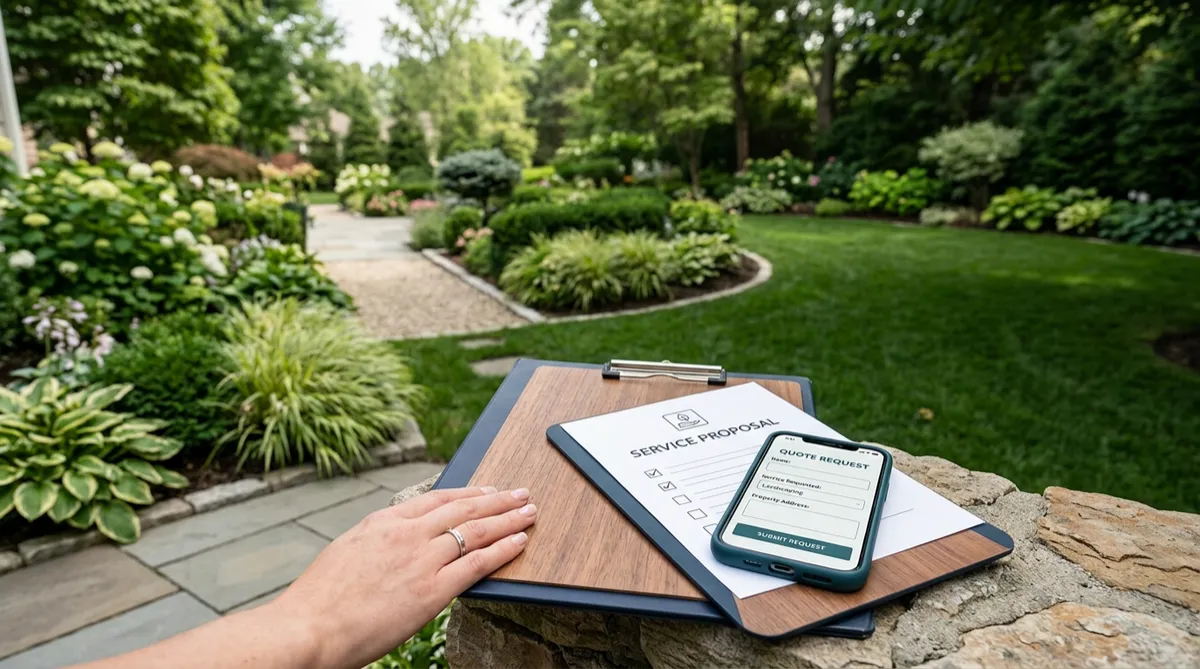
Landscaping Quote Requests: Follow Up Fast and Win More Estimates
A homeowner calling about a retaining wall, cleanup, or lawn service may be ready to move forward. But landscaping work keeps crews outside, driving, or with customers. If the call goes unanswered, the prospect may request another estimate. The cost can be a lost job and time spent generating an inquiry.
Make it easier to catch the next quote request and arrange a useful follow-up.
Why landscaping inquiries slip away
Many calls arrive at the worst possible moment: while unloading equipment, operating machinery, meeting a client, or wrapping up a job. A voicemail greeting asks the prospect to do more work. They must explain the project, leave contact details, and wait without knowing when anyone will respond. A web form can help, but only if somebody checks it frequently and follows up with enough context.
Slow follow-up also creates confusion for your team. A caller may speak with one person, text another, and later repeat the same details. Notes get lost; the estimate is delayed; and the customer has to wonder whether the request was received. An organized first response does not guarantee a sale, but it makes it easier for a good prospect to keep talking with you.
Build a simple first-response routine
Decide what should happen when you cannot answer. An AI receptionist can answer approved basic questions, collect a name and callback preference, and route unusual requests to a person. A text-back can acknowledge the missed call and ask what work is needed. Set an honest response expectation; do not promise an immediate callback if the crew is busy.
Use the first exchange to gather just enough information for a useful next step. For example:
- What work are they considering: maintenance, planting, hardscape, cleanup, or another service?
- Where is the property, and is it residential or commercial?
- When would they like the work completed?
- Would they prefer a call, a site visit, or an estimate appointment?
Keep questions brief. A caller who is on a break or standing outside may not want to fill out a long questionnaire. For projects that need a site assessment, explain that the details are an initial screen, not a final price. Never quote a complex job from a few text messages if an on-site review is necessary.
Turn the inquiry into a scheduled estimate
Once you know the service and location, offer a next step. Appointment scheduling can show estimate windows and send a confirmation. Leave room for travel, and define which work can be booked directly. Route exceptions for personal review.
Good lead capture supports a consistent handoff. Keep the project summary, contact information, source, and requested next step together so the person returning the call does not have to start over. A short confirmation can say when the team expects to respond and what details would be helpful to have ready, such as a property address or photos. Use a clear process for checking unanswered inquiries at the beginning and end of each workday.
For other field-service examples, see how HVAC teams capture after-hours leads and a practical approach to roofing inquiries during busy weather periods. The same principle applies across local services: acknowledge the person, gather useful context, and make the next step obvious.
Make the process fit your operation
Before automating, document your service area, hours, estimate process, and escalation owner. Decide which inquiries can be booked, need a callback, or are not a fit. Test incomplete requests and requests for a person. Keep options simple.
Then check whether the process is doing its job. Review how many inquiries received an acknowledgment, how many supplied enough details to follow up, how long it took a person to respond, and how many estimate visits were booked. These are operational measures, not proof that automation alone caused a sale. Use what you learn to adjust staffing, availability, and the questions you ask.
Want a response flow that works around crews, site visits, and seasonal demand?
Useful tools for landscaping lead response
An AI receptionist for incoming service calls can provide an orderly first point of contact. Pair it with lead capture for landscaping quote requests and appointment scheduling for estimate visits when those steps match your workflow. The goal is not to replace a knowledgeable estimator. It is to make sure the prospect reaches one without unnecessary friction.
Frequently asked questions
Should every landscaping caller be offered an appointment?
No. First confirm that the project and location fit your service rules. Some requests need a personal conversation or an on-site assessment before a calendar slot makes sense.
What should an automatic text say after a missed call?
Identify the business, acknowledge the call, ask what service is needed, and explain when a person will follow up. Keep it concise and avoid making promises your team cannot keep.
Can a receptionist provide an estimate?
It can collect scope details and explain your estimate process. A final price should follow the inspection or review your business requires.
Keep the next step easy
Every inquiry deserves a dependable path from first contact to a useful conversation. Set up an approach for AI reception, lead capture, and appointment scheduling that fits how your landscaping team actually works. Request a call to discuss a practical setup.
