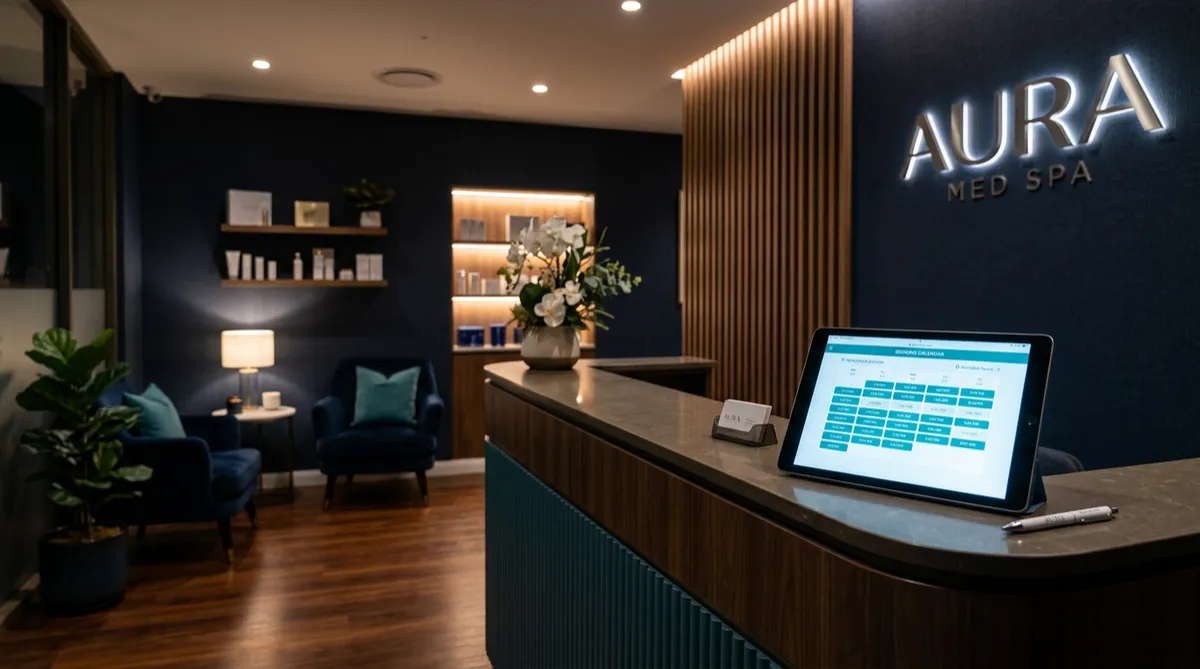
Med Spa After-Hours Booking: Fill Your Calendar While the Front Desk Is Closed
Someone considering a med spa appointment may browse options in the evening, during a lunch break, or over the weekend. If they call when the front desk is closed and reach only a generic voicemail, they may postpone contacting you or continue their search. That does not mean every after-hours inquiry would have become a booking. It does mean an unanswered request leaves the person without a clear way to ask a question or choose a next step.
Offer prospective clients a clear, considerate way to connect after hours.
Make after-hours access helpful, not pushy
Booking outside staffed hours should feel like an extension of good front-desk service. Give people an immediate acknowledgment, let them request a callback or appointment, and set realistic expectations for when the team will respond. Avoid presenting an automated exchange as individualized professional advice. Responses should follow the med spa’s own compliance rules, privacy practices, service policies, and escalation procedures.
An AI receptionist can answer basic logistical questions that your business has approved, such as opening hours, how to reach the front desk, or how to request an appointment. It can also capture a preferred contact method and route questions it should not answer to a staff member. Keep the boundary explicit: questions about whether a treatment is appropriate, expected outcomes, risks, or personal circumstances should go to qualified staff under your established process.
Design a short, respectful inquiry flow
Do not require a long intake conversation before someone can ask for a callback. Capture only information needed for the next administrative step:
- Name and preferred way to be contacted.
- Whether the person wants a callback, appointment request, or general information.
- A broad service area of interest, only if your policies permit collecting it.
- Preferred days or times, if they want the team to help schedule.
Tell people what happens next. For example, note that a team member will review the inquiry during business hours. If appointment requests are available online, show the approved availability and describe what the appointment represents. Do not imply that a request is confirmed until the calendar or staff process has actually confirmed it.
Make scheduling and handoff reliable
Appointment scheduling can make it easier to select an available time without waiting for a phone callback. Configure it around real capacity, appointment types, staff schedules, buffer time, and any prerequisites your team requires. Use confirmation and reminder messages that state the date, time, location or connection details, and how to contact the front desk with a change. If a person needs assistance or a slot requires staff review, provide a clear route to that help.
Lead capture should preserve the context behind an inquiry, not collect sensitive information just because a form allows it. Review the questions, storage, access, and follow-up language with the people responsible for your policies. Keep automated messages limited to approved administrative content. Do not ask a conversational tool to gather information that your team does not need or is not prepared to handle appropriately.
Businesses in other appointment-driven fields face a similar challenge. See how an electrician can organize appointment requests and why prompt first replies matter in real estate inquiries. The details differ, but a clear acknowledgment and dependable handoff help prevent uncertainty.
Cover the hours your team cannot
Start by listing opening hours, response expectations, appointment types, and the questions staff can answer. Decide what should be booked directly, what should be sent to the front desk, and what must be escalated. Use straightforward language that avoids guarantees about availability or results. Let staff know how after-hours inquiries will appear and who owns the next action when the office opens.
Review for unacknowledged inquiries, incomplete booking requests, and inaccurate availability. Ask staff whether handoffs save time, and track operations without assuming after-hours response alone caused a booking.
Explore an after-hours process that gives clients access while keeping staff in control.
Keep the experience connected to your front desk
An AI receptionist for after-hours inquiries can acknowledge callers using approved information. Combine med spa lead capture with appointment scheduling for prospective clients if those tools fit your policies and workflow. The best setup is clear about what it can do and makes it simple for a person to take over.
Frequently asked questions
Can clients book appointments after the front desk closes?
They can request or select appointments if your scheduling rules allow it. Explain whether the time is confirmed immediately or needs staff approval, and keep availability accurate.
Should automated responses answer questions about treatments?
Only use content your team has approved for that purpose, and route personal, clinical, or otherwise sensitive questions to the appropriate staff under your own compliance rules.
What should an after-hours response promise?
It should promise only what the business can deliver, such as acknowledgment and a stated business-hours follow-up window. Avoid guaranteeing a booking or outcome.
Make it easy to request a conversation
A good after-hours process gives people a useful next step and gives the front desk the context to follow through. If you are considering AI reception, lead capture, and appointment scheduling for your med spa, request a call to discuss a setup that follows your team’s rules.
