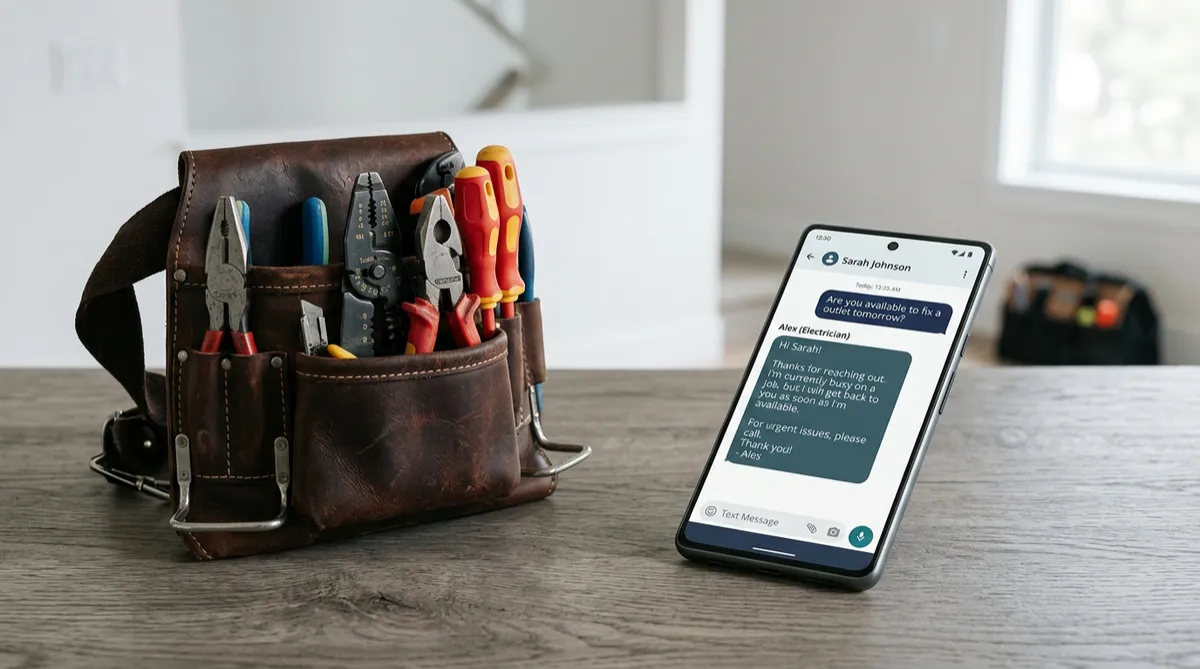
Electrician Missed Call Text Back: Win the Job Before They Call Someone Else
Electrical work is hands-on. When you are troubleshooting a panel, carrying materials, or driving to a job, answering an incoming call may be unsafe or impractical. But a new customer usually does not know why you could not pick up. They simply need to know whether they reached the right business and what to do next. A missed-call text back can close that communication gap, provided it is timely, clear, and backed by a real follow-up process.
A caller who hears nothing may keep looking for an electrician. Get a free consultation to plan a missed-call response that fits your electrical service business.
What a useful missed-call text should do
The first message is not a sales pitch. It should acknowledge the call, identify your business, and offer one simple next step. For example, it can say that the team is unable to answer right now, ask the customer to briefly describe the work, and let them know whether they can request a callback or an appointment. Keep the tone direct and calm.
A short response is easier to understand than a paragraph of marketing language. Avoid claiming that a technician is on the way, that the business can handle every electrical issue, or that someone will call within a specific period unless your process can guarantee it. If a request may involve an immediate safety hazard, do not try to diagnose it by text. Use approved safety wording and direct the person to appropriate emergency assistance when necessary.
Capture the information that makes a callback useful
Keep the conversation organized. Staff should be able to see the original missed call, the text exchange, the contact details, and any appointment request together. If an inquiry arrives through multiple channels, make it clear who owns the follow-up so two people do not respond independently while another lead goes untouched.
Choose the next step: callback, booking, or intake
Not every electrical call should be handled the same way. A customer may want an estimate, a service visit, a project consultation, or an update on an existing job. Decide which requests can use a standard appointment option and which need a person to review the details. A scheduling link or booking flow should show realistic availability and make clear whether a time is confirmed or merely requested.
Set response rules your team can keep
An automated text can send quickly, but the human response still matters. Pick a follow-up owner and a realistic time frame during business hours. Decide how to handle replies after closing, weekends, and holidays. If a team member is unavailable, route the inquiry to a shared queue rather than a personal phone where it could be missed.
- Send a clear acknowledgement after an unanswered call.
- Invite a short description and a way to reach the customer.
- Tag or route the inquiry by service type and urgency.
- Notify the person responsible for callbacks and appointments.
- Close the loop when the customer is booked, declined, or no longer needs help.
Use an AI receptionist for electrical service calls when you want a caller to get an immediate first response and intake options. Missed-call lead capture can help organize the information, while appointment scheduling for electricians can make the next step easier when your availability is known.
Measure follow-up quality, not just speed
Review whether missed calls receive an acknowledgement, how many customers reply, whether the team reaches them, and how many become scheduled work. Look at the quality of the request details and the time from first call to human follow-up. A fast text that goes nowhere is not success; the goal is a clear handoff that helps the customer and the business.
For the next step after a missed call, read how appointment booking can reduce scheduling back-and-forth. You can also review a practical approach to missed calls for service businesses.
Looking for a cleaner handoff from missed call to booked electrical work? See what a tailored follow-up flow could look like.
Frequently asked questions
Should the text be sent immediately?
A prompt acknowledgement is generally more helpful than a delayed one, as long as it is accurate and does not promise a callback time the team cannot meet. Make sure the message identifies the business and gives a clear next step.
Can a missed-call text book an appointment automatically?
It can offer booking when your calendar, service types, and availability rules are configured for that purpose. Confirm whether the customer's selected time is final or awaits staff approval.
What if the caller has an urgent electrical concern?
Do not attempt a technical diagnosis by text. Follow your written escalation and safety instructions, and make sure the customer can reach an appropriate person or emergency resource when the situation calls for it.
Make every response lead somewhere useful
A missed-call text back works best as part of a simple operating process: acknowledge the call, capture a few useful details, route the request, and follow through. It does not have to replace a personal conversation. It gives the customer a reason to stay in touch while your team finishes the work in front of them. Start with your common call types, write honest response wording, and make ownership of each reply unmistakable.
Turn missed calls into a clear next step
Request a call to discuss setting up AI receptionists, lead capture, and appointment scheduling for your electrical business.
