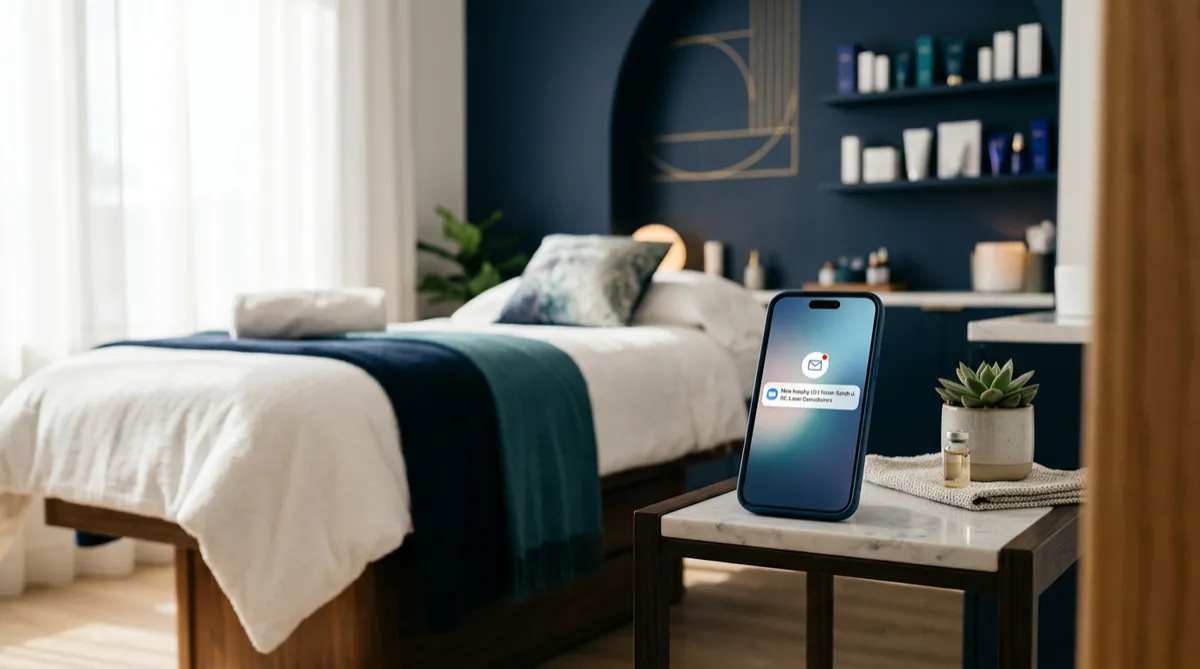
Med Spa Lead Capture: Why Speed-to-Lead Fills the Treatment Calendar
A prospective client may call or submit a form between appointments, after the front desk closes, or while staff are helping someone in person. If the inquiry sits unanswered, the person may keep searching rather than wait for a callback. For a med spa, the first response is not a place to make treatment promises. It is a chance to acknowledge the inquiry, capture the right contact details, and explain how the practice handles next steps.
A defined lead-capture process helps staff respond consistently without interrupting care or overstepping the practice's own rules. Speed matters, but a fast response should still be accurate, respectful, and appropriate for the channel.
Want a more dependable way to respond to new inquiries? Get a free consultation about lead capture and appointment follow-up for your practice.
What speed-to-lead means in a med spa
Speed-to-lead is the time between a person's inquiry and the first useful response from the business. It is not a promise that every inquiry becomes an appointment. A helpful response confirms that the message arrived, clarifies the next step, and gives the person a way to reach the team if their question needs attention sooner.
People often contact a practice when they are comparing schedules, asking about a service, or trying to understand how to arrange a consultation. A timely acknowledgment can prevent uncertainty about whether the message went through. It can also help your staff begin with context instead of starting from a blank screen.
Capture the information staff need
Keep intake focused on administrative details. Depending on your approved workflow, a form or receptionist may collect:
- Name and preferred contact method.
- The service or consultation category the person selected, using the practice's own approved labels.
- A preferred time to be contacted or appointment availability, if scheduling is offered.
- Whether the person has an existing appointment or is making a new inquiry, when that helps route the message.
Do not encourage people to include health histories, photographs, medication details, or other sensitive information in a general marketing form or unsecured message. If the practice needs clinical information, staff should direct the person to the approved process and channel. Configure automated messages to avoid collecting information the practice does not need.
Keep responses within practice rules
Before using an automated reply, have the appropriate person at the practice review the wording, collection fields, routing, and access rules. Follow the practice's privacy policies and applicable requirements. A receptionist can explain how to request an appointment or how to reach the office; it should not diagnose, recommend a procedure, state that a person is a suitable candidate, or promise a result.
Use cautious, plain language. For example, acknowledge the question and say a team member can discuss service information or arrange a consultation. If a message includes a clinical concern or asks whether a treatment is appropriate, route it to qualified staff according to the practice's procedure rather than trying to answer automatically.
Build a useful follow-up path
Decide who owns each inquiry from arrival to resolution. New calls, website forms, and social messages should reach a shared process, or at least have clear owners and handoff rules. Track whether a person received a response, whether they requested an appointment, and whether the team needs to follow up. Avoid duplicating outreach when another staff member has already handled the inquiry.
Where the person has consented and your rules allow it, use their selected contact channel to confirm receipt or offer a next step. Keep the message short, identify the practice, and make it easy to contact a person. If the inquiry is outside business hours, state when the office is expected to respond rather than implying immediate clinical availability.
For appointment requests that arrive after closing, see how med spas can handle after-hours booking inquiries. For the call-answering side, this guide to capturing missed calls at service businesses offers a practical starting point.
Use automation for consistency, not pressure
An effective first response is helpful, not aggressive. Avoid repeated messages that create pressure or imply that a person will lose a treatment opportunity if they do not book immediately. Let people choose whether and how they want to be contacted, and provide a straightforward way to stop nonessential follow-up where required by your process.
Review response timing and handoffs using operational information your practice is permitted to review. Look for unanswered inquiries, duplicate contacts, or questions that regularly need a human answer. These patterns can point to a missing routing rule, a confusing form, or a need to update the front-desk script. Do not use marketing reports to make clinical decisions.
To structure a compliant administrative workflow, explore lead capture for med spa inquiries, AI receptionist options for front-desk coverage, and solutions tailored to med spa operations.
Make prompt follow-up part of a calm, consistent client experience. Discuss the right setup for your intake rules in a free consultation.
Frequently asked questions
Can automation answer treatment questions?
Keep automated messages to administrative information approved by the practice. Questions about suitability, risks, or individual care should go to qualified staff using the practice's chosen process.
Should a lead form ask for health details?
Only collect information the practice has approved for that form and channel. General inquiry forms should usually stay focused on contact preferences and the type of appointment requested; direct sensitive questions to the approved intake route.
How quickly should staff respond?
Set a response standard the team can meet and explain it clearly. A prompt acknowledgment is useful, but it should not suggest that the office is available for clinical questions outside its actual coverage.
Move inquiries toward the right next step
Med spa lead capture works best when it joins timely acknowledgment with clear limits, thoughtful routing, and reliable human review. Use automation to organize administrative follow-up while protecting the practice's standards. To request a call about setting up AI receptionists, lead capture, and appointment scheduling, request a consultation.
