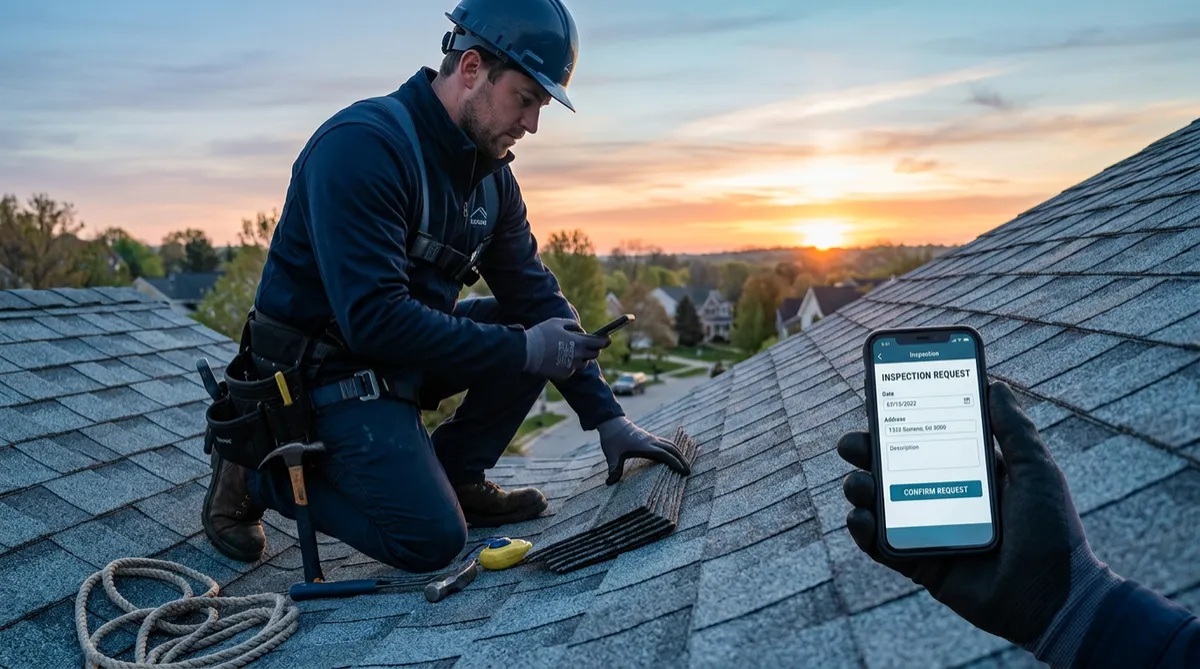
Roofing AI Receptionist: Capture Every Inspection Request
Roofing inspection requests do not always arrive when an estimator is at a desk. Homeowners may call during a storm, after noticing a leak, or while comparing contractors in the evening. If your crew is on a roof and the office is busy, a call can go unanswered just when the property owner is ready to ask for help. An AI receptionist can provide a first response and capture the details your team needs to decide what to do next.
A delayed response can leave an inspection request without a clear next step. Get a free consultation to explore a roofing call flow for inspection leads and appointment requests.
What an AI receptionist should capture
For a roofing inquiry, the basics are usually more useful than a long scripted interview. Capture the caller's name and callback number, the property address or service area, whether the request is residential or commercial, and a short description of what they noticed. Ask whether they are seeking an inspection, repair, estimate, or follow-up on an existing project.
Route requests by need, not by guesswork
Roofing businesses often handle several types of calls: new inspection requests, active leaks, storm-related inquiries, estimate questions, project updates, and supplier calls. Use a small number of clear categories to route the request. A caller reporting active damage may need a different response from someone requesting a routine roof replacement estimate. Existing customers should have a path that does not place them in the same queue as a new lead.
Write down what counts as urgent for your operation and who is responsible for those calls. The system can collect the caller's description and follow your stated escalation rules, but a qualified team member should make decisions that require judgment. Provide callers with accurate information about whether someone will contact them and what they should expect next.
Connect lead capture to a real follow-up owner
A captured inquiry is not automatically a qualified opportunity. Make sure each request reaches the person responsible for reviewing it. A useful notification includes contact details, property location, request type, short issue summary, urgency flag if applicable, and any appointment preference. Put the information where estimators or office staff already work rather than creating another inbox that nobody checks.
Set a clear follow-up routine. For example, a team member might review new requests at set intervals during business hours, confirm whether the property is in range, and contact the homeowner to discuss inspection timing. Define a backup owner for busy days and a process for requests received after closing. If a caller cannot be reached, decide whether and when to make another attempt.
Use scheduling carefully
Automated appointment scheduling can reduce back-and-forth for inspections, but only if the schedule reflects the work. Consider drive time, service area, inspection length, estimator availability, and weather-related changes. Some companies may want callers to select a confirmed inspection slot; others may prefer to collect a preferred window and have staff confirm it. The language in the booking flow should match the actual commitment.
Keep storm-season calls manageable
Call volume can change quickly after severe weather. Build a storm-specific path before it is needed. Decide what information to collect, how to prioritize active issues, what areas you serve, and how the team communicates realistic timing. Avoid phrases that imply guaranteed immediate service or a particular outcome. A concise acknowledgement and an honest next step can reduce uncertainty without overpromising.
- Identify the property and the best callback number.
- Ask whether the caller needs an inspection, repair, estimate, or project update.
- Record a short description of the observed issue and when it began.
- Apply your written escalation rules for active or urgent concerns.
- Route the request to an assigned person for follow-up or booking confirmation.
Explore AI receptionist coverage for roofing inquiries, lead capture for roof inspection requests, and appointment scheduling for roofing inspections. These functions should work together: answer the caller, organize the request, and make the next step visible to both the customer and your staff.
Make the conversation easy for homeowners
Use plain language and ask one question at a time. People may be calling while worried about property damage, and complicated menus can create frustration. Tell them what information is helpful, allow them to correct a detail, and provide a way to request a human. Keep the greeting clear about who is answering and do not make the caller repeat the same information to multiple people.
For related guidance, read how roofing teams can respond to storm-season leads and how service businesses can handle missed calls with an AI receptionist.
Ready to make inspection requests easier to capture and manage? Talk through a roofing lead-response setup.
Frequently asked questions
Can an AI receptionist book a roof inspection?
It can offer appointment options when your schedule and booking rules are configured for inspections. Decide whether the time is confirmed automatically or must be approved by a team member, and state that clearly to the caller.
What if the caller reports storm damage or an active leak?
Use your written intake and escalation rules. Capture the location, callback details, and a brief description, then route the request to the appropriate person. Do not ask an automated receptionist to diagnose the roof or guarantee a response you cannot provide.
What information helps qualify an inspection request?
Start with contact details, property location, job type, and a concise description of the concern. Add only the questions your estimator needs to determine service eligibility and plan a follow-up.
Build the process around the next action
Set up roofing lead capture that leads to action
Request a call to discuss AI receptionists, lead capture, and appointment scheduling for roofing inspection requests. We can map the caller experience and the handoff your team needs.
